the art of space: Lessons from IFAT
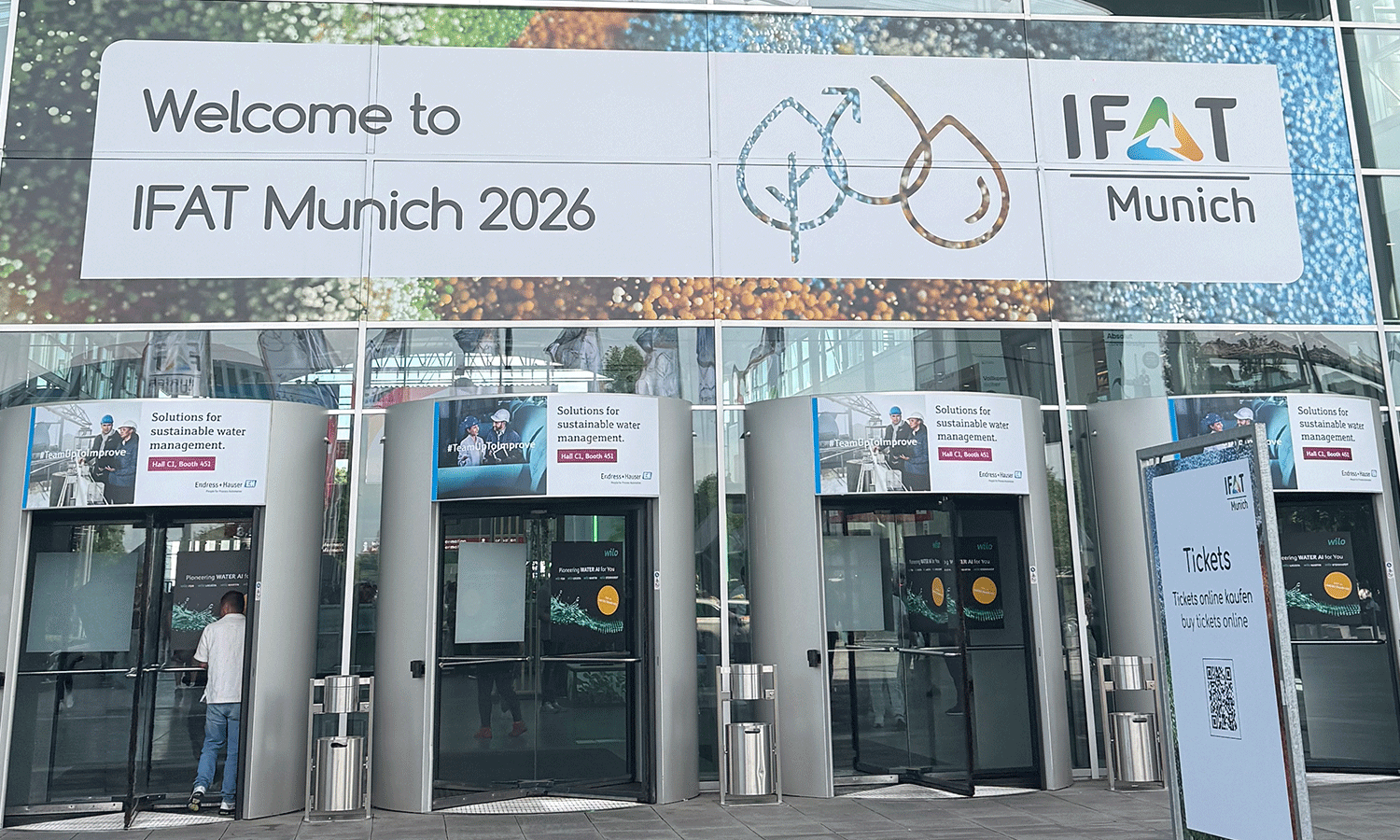
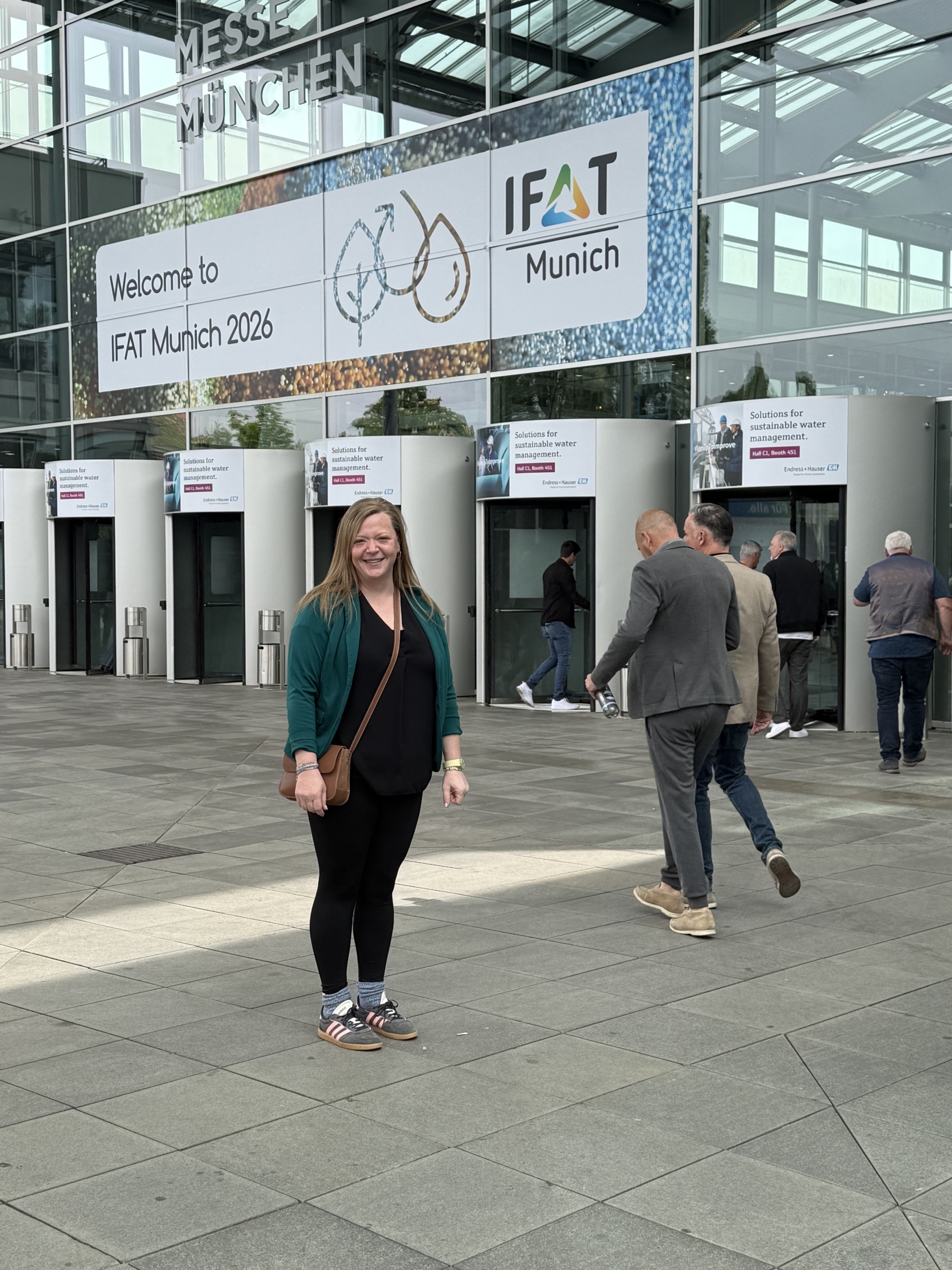
After walking the eleven(!) fantastic halls of IFAT, one thing became increasingly clear: the water industry is not short on innovation — it can often be short on clarity in how that innovation is communicated.
Across the exhibition floor, the technology was impressive, the engineering was deep, and the ambition around sustainability and infrastructure was undeniable. But the difference between booths that drew people in and those that were passed by often came down to how well they told a story — and how clearly that story was expressed within each space.
What stood out the most were not isolated design decisions, but the way several key elements worked together: storytelling, engagement, graphic clarity, messaging, product placement, and live interaction. When aligned, they created booths that felt alive rather than simply technical and static.
storytelling as the foundation of engagement
The strongest booths at IFAT all shared a common thread — they were built around a clear storytelling narrative.
Rather than presenting everything at once, they guided visitors through a simple structure: a hook that captured attention, a central idea that explained the value, and an action that invited deeper engagement.
This storytelling approach changed how people moved through space. Instead of passively scanning technical information, visitors were drawn into a strategic sequence. The booth became something to experience and absorb, rather than simply observe and learn from.
When storytelling was missing, booths often defaulted to information overload — lots of technical detail and photography, but no clear narrative to drive the experience or messaging that spoke to the brand personality and positioning.
Graphic and messaging clarity
Booths that were buzzing with engagement with visitors admiring their content used bold, contemporary, and confident graphics that did not compete against busy information panels for attention.
Large-scale headlines, simple compositions, and disciplined typography systems made it immediately clear what story the brand was representing and portrayed clear, relatable brand visuals. The importance of visual storytelling and the implementation of clear guidelines across all material in and outside of the booth enhances brand recognition and gives visitors that sense of familiarity well before they step inside it.
Messaging followed the same principle. The shift from overly technical language to benefit-led communication was noticeable. Instead of leading with system specifications or engineering detail, the strongest booths focused on outcomes — cleaner water, improved efficiency, reduced energy use, smarter infrastructure.
Taglines that worked were short, direct, and confident. They didn’t try to explain everything — they created focus. In contrast, more complex messaging often slowed down understanding and reduced engagement.
Clarity wasn’t just a design choice. It was a performance driver.
product placement as a storytelling tool
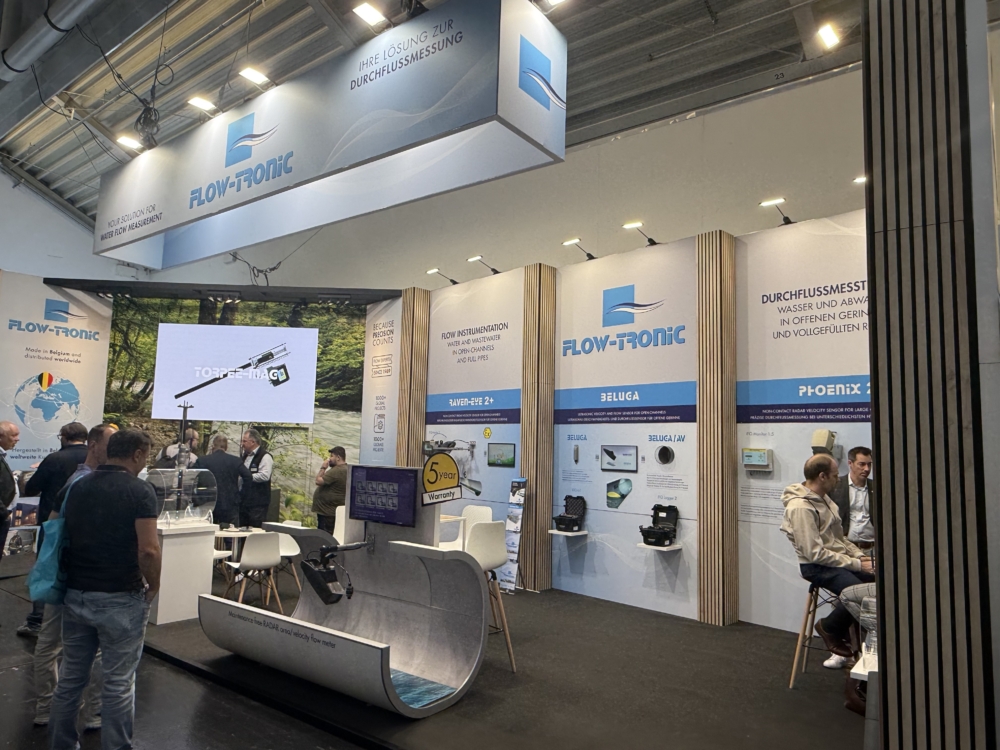
One of the most effective spatial strategies observed at IFAT was how products were placed within the booth — particularly at the edges and corners of front-facing zones.
Rather than hiding technology deep inside the stand, strong exhibitors positioned key products where they were immediately visible from the aisle. This created instant understanding before a visitor even entered the space.
Our partners at FlowTronic found that this front-edge product placement became one of the strongest engagement drivers within their booth. It lowered the barrier to entry for conversation and allowed people to “read” the technology visually before any explanation was needed.
In many cases, product placement itself became part of the storytelling — reinforcing function and brand messaging through visibility, proximity, and context.
Live presentations and human engagement
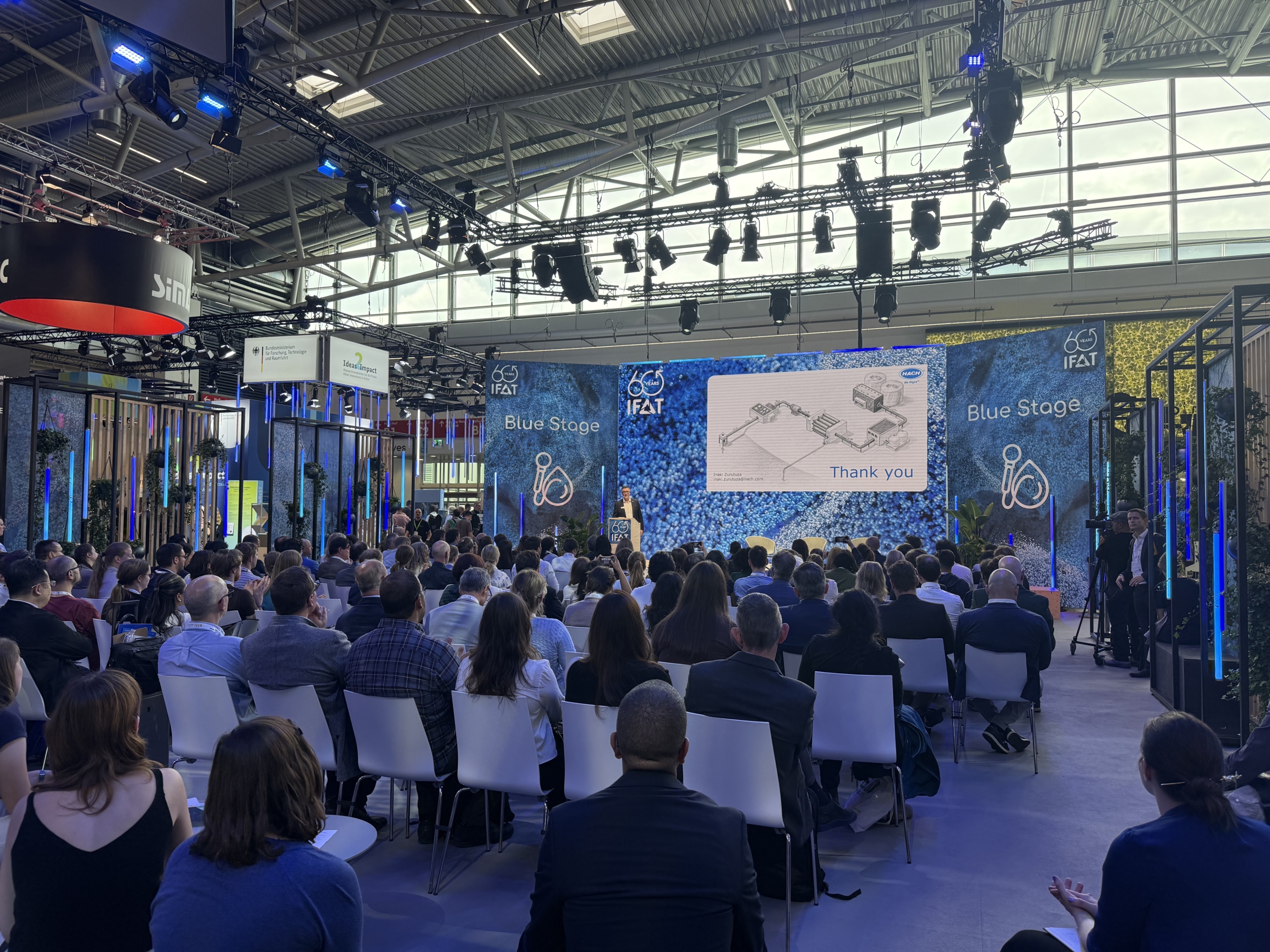
Another clear pattern at IFAT was the impact of live informal presentations and welcoming visitors in for educational and engaging moments.
Rather than isolating talks in enclosed rooms or structured sessions, some of the most successful booths integrated presentations directly into open, well-designed spaces with large presentation walls and screens. This allowed content to become part of the overall experience rather than something separate from it, bringing the team and employees into the experience and providing that networking connection between exhibitors and viewers.
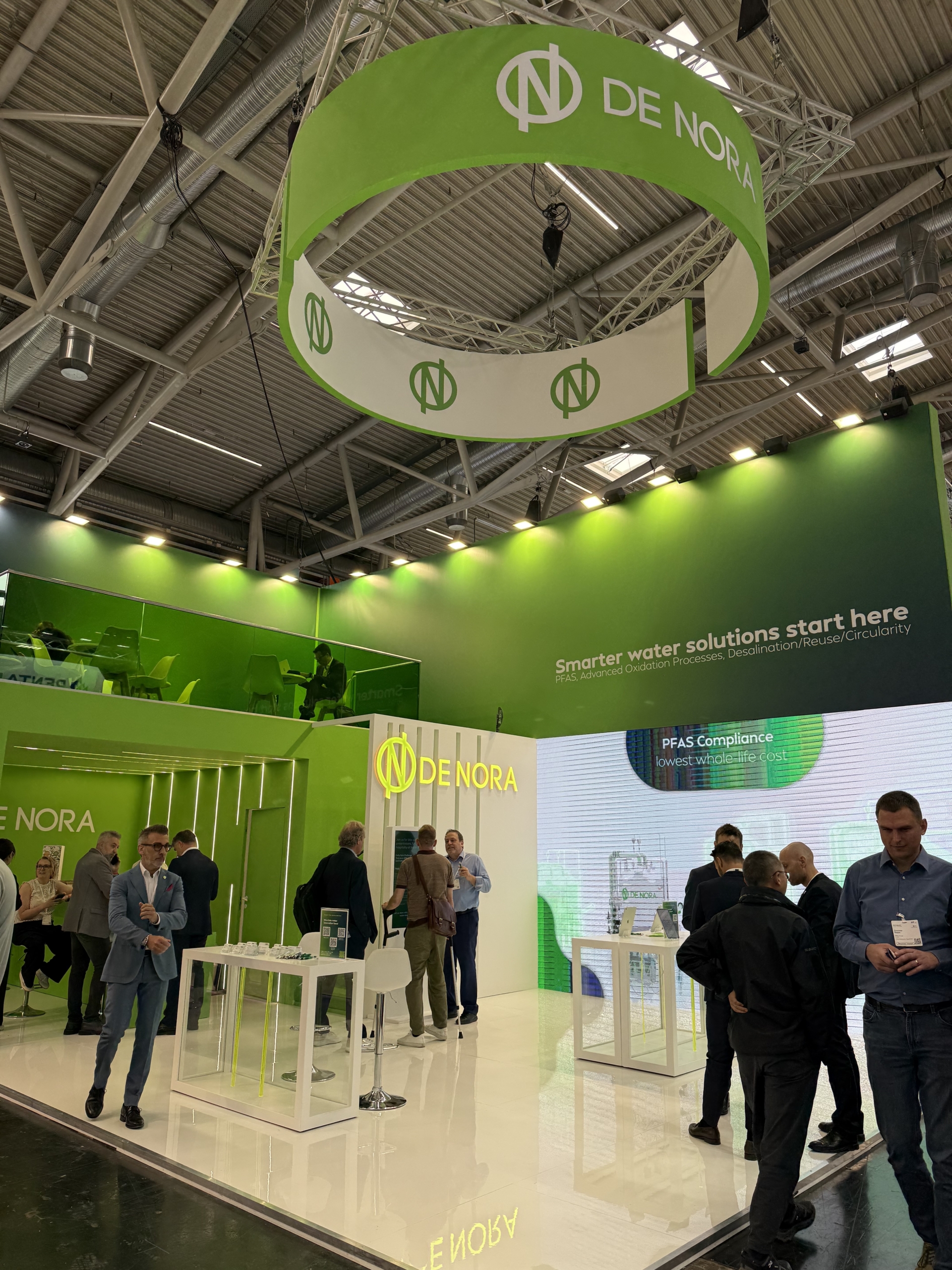
Our partners at DeNora saw that embedding presentations within their brand new booth layout significantly increased their engagement. People naturally gathered, paused, and stayed longer in the space than they would have were they simply walking by.
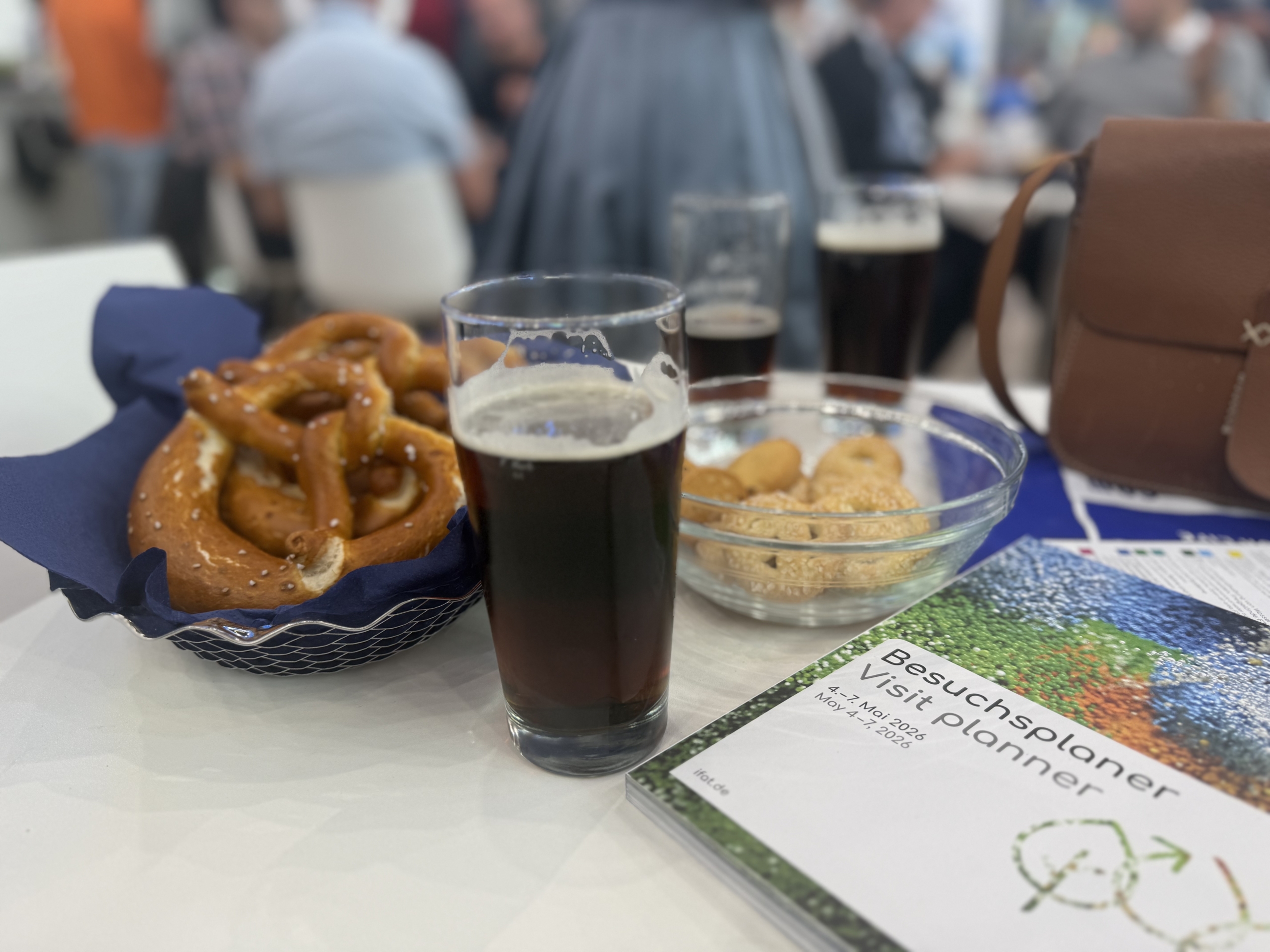
In addition, booths that incorporated informal elements — conversations over coffee, beer, or local food — created an entirely different rhythm of interaction. These moments weren’t just hospitality; they were engagement tools. They made technical discussions more accessible and relative.
bringing it together: A system of engagement
What became clear across IFAT is that none of these elements work in isolation.
Storytelling sets the direction.
Graphic clarity makes it understandable.
Messaging makes it meaningful.
Product placement makes it immediate.
Live presentations make it human.
When all of these align, booths stop behaving like static displays and start functioning as living environments — spaces that invite people in, hold their attention, and create real conversation.
The water industry is already solving complex global challenges. The opportunity now is ensuring those solutions are communicated with the same level of clarity and intent as the engineering behind them.
The biggest takeaway? The most effective booths at IFAT weren’t the ones saying the most—they were the ones that used simple, clear, and engaging storytelling to make them difficult to ignore.
YOUR FULL-SERVICE
water ally
Most agencies need time to catch up. We’re already in the current with you.
With full-service marketing and deep water expertise under one roof, Bā helps brands break through bottlenecks and find their flow.
wellspring
drink it in
The freshest source for industry insights, marketing tips and creative inspiration from the Bā team.

What is newsjacking + how to leverage it effectively
“Newsjacking” may sound flashy, but at its core, it’s a smart and timely way to join a bigger conversation—and make your brand more visible in the process. Done right, it positions your company as insightful and relevant. Done wrong, it feels tone-deaf or self-serving.
Here’s what water brands need to know about newsjacking—and how to do it well.

How AI decides which water companies to trust
Generative AI is changing how people gather information — and for niche sectors like municipal and industrial water, the stakes are especially high. When operators, engineers and procurement teams turn to AI tools for clarity, the quality of your content directly shapes what they see.

Why engineers deserve better marketing
Marketing plays an essential role to shine a light on engineering expertise and clearly communicate the value of their creations.

Shaping the narrative: The power of PR in water innovation
Whether you’re introducing new technology, responding to regulatory shifts or entering a new market, effective public relations doesn’t just share your message. It shapes it.
Momentum in motion: Bā’s top PR wins of 2025
In 2025, we partnered with ambitious water brands during moments of growth, change and opportunity. Here are some of the standout PR moments that defined the year.

Messaging matters: What are messaging strategy services and how do they make an impact?
Transform your water industry brand with messaging strategy. Communicate clearly, build trust and stand out in the market with tailored messaging that sparks action.
Orchestrating a seamless product launch for water industry innovations
Launching a new product in the water sector takes more than innovation—it takes alignment, momentum and trust. Whether you’re rolling out a treatment solution, digital platform, SaaS product or launching a water-focused service or initiative, the success of your launch hinges on how well you connect your offering to the people who need it most.

What’s the biggest mistake water brands make when engaging a creative team?
Water brands: Your creative brief is more important than your budget. We reveal the most common mistakes and how a strong brief can lead to more effective, impactful creative.