11 mistakes water brands make before a website redesign

For executive leaders and marketers in the water and wastewater sector, your website is far more than just an online brochure. It’s your 24/7 sales representative, your thought leadership hub, your customer service portal and the primary engine driving your digital strategy. So, when it comes time for a website redesign, the stakes are high. It’s an opportunity to revitalize your brand, improve lead generation and solidify your market position.
However, a redesign project, if not approached strategically, can quickly lead to wasted budget, misaligned goals and ultimately, poor ROI. At Boeh Agency, we know water, and we understand the unique challenges your brands face. We’ve seen firsthand how a well-executed redesign can transform a business, but also the common pitfalls that can derail even the best intentions.
Are you contemplating a website refresh? Let’s explore 11 common mistakes water brands make before diving into a redesign, and how, with the right approach, you can ensure your project delivers lasting momentum.
The foundation of your digital presence: Getting it right
Your website is the cornerstone of your online identity—a crucial touchpoint for prospects, partners and existing clients. It influences perceptions, educates and drives action. A redesign is an investment in your future, making it vital to get the preparatory steps right.
11 mistakes water brands make before redesigning a website
Navigating a website redesign can feel complex, but avoiding these common missteps will create clear solutions for your project.
1. Not defining clear goals
- The mistake: Jumping into design without articulating what the new website needs to achieve. Is it lead generation, brand awareness, e-commerce, improved customer service or a combination?
- The fix: Before anything else, establish specific, measurable, achievable, relevant and time-bound (SMART) goals. This creates a roadmap for success and a benchmark for measurable outcomes.
2. Prioritizing a website redesign over an investment in brand identity or messaging
- The mistake: Redesigning a website without confidence in the brand’s visual identity or the shared language around your brand’s core values, mission, product + service descriptions or key differentiators.
- The fix: Once your goals are established, evaluate your internal team’s confidence in the brand’s recognition and recall. If your internal team expresses concerns in this area, we can help. We offer a variety of consulting services, including brand auditing, messaging strategy and brand-intensive workshops to help you master your visual identity, tone of voice and messaging pillars before the start of your website redesign. This investment of time and strategy removes bottlenecks or delays that may arise from differing opinions on how the brand should be represented online.
3. Ignoring user experience (UX)
- The mistake: Prioritizing flashy aesthetics over intuitive navigation and a seamless user journey. If users can’t find what they need easily, they’ll leave.
- The fix: Put your users first. Conduct user research, create user personas and map out user flows. A good user experience (UX) keeps visitors engaged and guides them toward your desired actions.
4. Neglecting search engine strategy from the start
- The mistake: Treating SEO (Search Engine Optimization), GEO (Generative Engine Optimization or AEO (Answer Engine Optimization) as an afterthought, only considering it once the new site is built. This can lead to a significant drop in organic traffic.
- The fix: Integrate a search strategy into every stage of your redesign. Conduct keyword research, map existing content to new URLs, ensure proper redirects are in place and optimize site structure from day one. Your visibility depends on it.
5. Overlooking content strategy
- The mistake: Believing the existing website content will simply transfer over, or waiting until the design is complete to think about new content. This often results in generic, uninspired copy.
- The fix: Develop a comprehensive content marketing strategy upfront. Audit existing content, identify gaps, plan for new, compelling material and ensure your messaging aligns with your brand’s voice and goals. This is where deep water + marketing expertise truly shines.
6. Focusing only on aesthetics (not functionality)
- The mistake: Getting caught up in visual appeal without considering how the site will function—its load speed, integrations with other systems (CRM, marketing automation) or backend management.
- The fix: Balance design with functionality. Ensure the chosen platform and technologies support your operational needs and deliver a robust, scalable website that performs well.
7. Failing to analyze current website performance
- The mistake: Not reviewing analytics from your current site to understand what’s working (and what isn’t). This means you miss opportunities to improve.
- The fix: Dive into your Google Analytics, search console data and other metrics. Identify popular pages, common exit points, traffic sources and conversion paths. This insight meets impact, guiding intelligent redesign decisions.
8. Not involving key stakeholders
- The mistake: Excluding sales, product development, engineering or customer service teams from the planning process. Their unique perspectives are invaluable.
- The fix: Create a cross-functional redesign committee. Gather input from all departments that interact with the website or its users. This fosters internal alignment and ensures the new site serves diverse needs, collaborating for clear solutions.
9. Underestimating the project scope + timeline
- The mistake: Being overly optimistic about how quickly a redesign can be completed, leading to rushed decisions and compromised quality.
- The fix: Work with experienced professionals to develop a realistic project scope, budget and timeline. Account for discovery, design, development, content creation, testing and launch.
10. Forgetting mobile responsiveness
- The mistake: Designing primarily for desktop and assuming mobile will just “work.” With most B2B research happening on mobile devices, this is a critical oversight.
- The fix: Prioritize a mobile-first design approach. Ensure your website looks and functions flawlessly across all devices, providing an optimal user experience (UX) for every visitor.
11. Choosing the wrong partner (or no partner)
- The mistake: Attempting a complex redesign with an in-house team lacking specialized expertise, or hiring a generalist agency that doesn’t understand the nuances of the water sector.
- The fix: Partner with a specialist agency that truly understands your industry and your unique challenges. Boeh Agency is built for water brands—we’re your full-service ally and trusted guides with water expertise. We know how to navigate the intersection of water + marketing to deliver a website that drives tangible results.
Redesigning with confidence: Your Boeh Agency advantage
A website redesign is a powerful opportunity to accelerate growth and empower your brand in the water and wastewater sector. It’s more than just a fresh coat of paint; it’s about optimizing your most valuable digital asset. By avoiding these common mistakes, you can ensure your investment yields significant returns.
We anticipate the shifts in the water sector to position your brand for future growth. Let us help you create clarity, inspire action and turn your vision into a high-performing reality.
Ready to launch a website that checks all the boxes for your water brand? Contact our team today for a free consultation.

YOUR FULL-SERVICE
water ally
Most agencies need time to catch up. We’re already in the current with you.
With full-service marketing and deep water expertise under one roof, Bā helps brands break through bottlenecks and find their flow.
wellspring
drink it in
The freshest source for industry insights, marketing tips and creative inspiration from the Bā team.

How AI decides which water companies to trust
Generative AI is changing how people gather information — and for niche sectors like municipal and industrial water, the stakes are especially high. When operators, engineers and procurement teams turn to AI tools for clarity, the quality of your content directly shapes what they see.
Why engineers deserve better marketing
Marketing plays an essential role to shine a light on engineering expertise and clearly communicate the value of their creations.
Shaping the narrative: The power of PR in water innovation
Whether you’re introducing new technology, responding to regulatory shifts or entering a new market, effective public relations doesn’t just share your message. It shapes it.
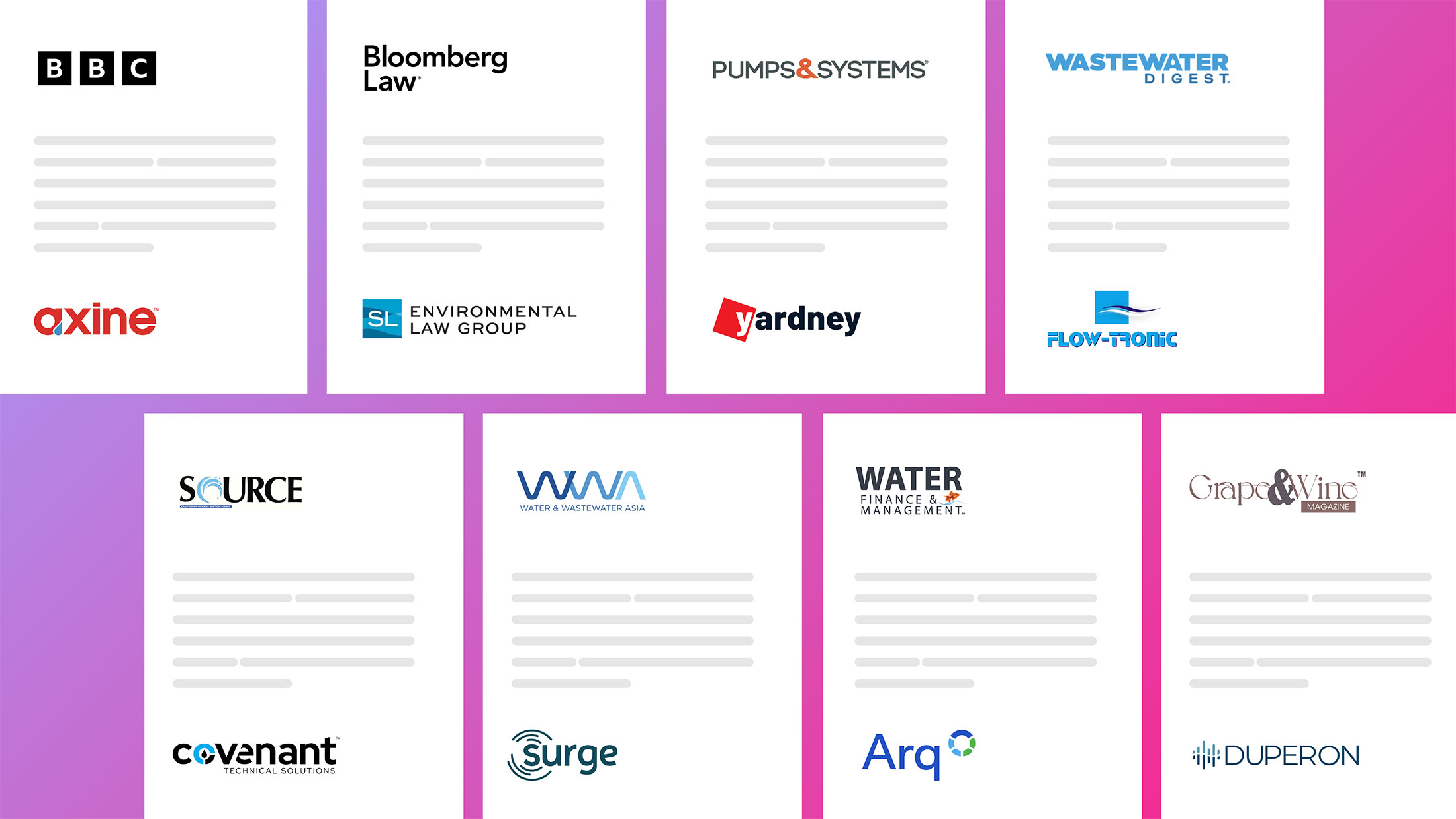
Momentum in motion: Bā’s top PR wins of 2025
In 2025, we partnered with ambitious water brands during moments of growth, change and opportunity. Here are some of the standout PR moments that defined the year.
Messaging matters: What are messaging strategy services and how do they make an impact?
Transform your water industry brand with messaging strategy. Communicate clearly, build trust and stand out in the market with tailored messaging that sparks action.
Orchestrating a seamless product launch for water industry innovations
Launching a new product in the water sector takes more than innovation—it takes alignment, momentum and trust. Whether you’re rolling out a treatment solution, digital platform, SaaS product or launching a water-focused service or initiative, the success of your launch hinges on how well you connect your offering to the people who need it most.

What’s the biggest mistake water brands make when engaging a creative team?
Water brands: Your creative brief is more important than your budget. We reveal the most common mistakes and how a strong brief can lead to more effective, impactful creative.
What is a strategy session + what can it do for my brand?
A strategy session helps your team align, prioritize and make decisions based on where you are now and where you want to go. It’s not a one-size-fits-all workshop. It’s a custom session designed to move your brand forward.